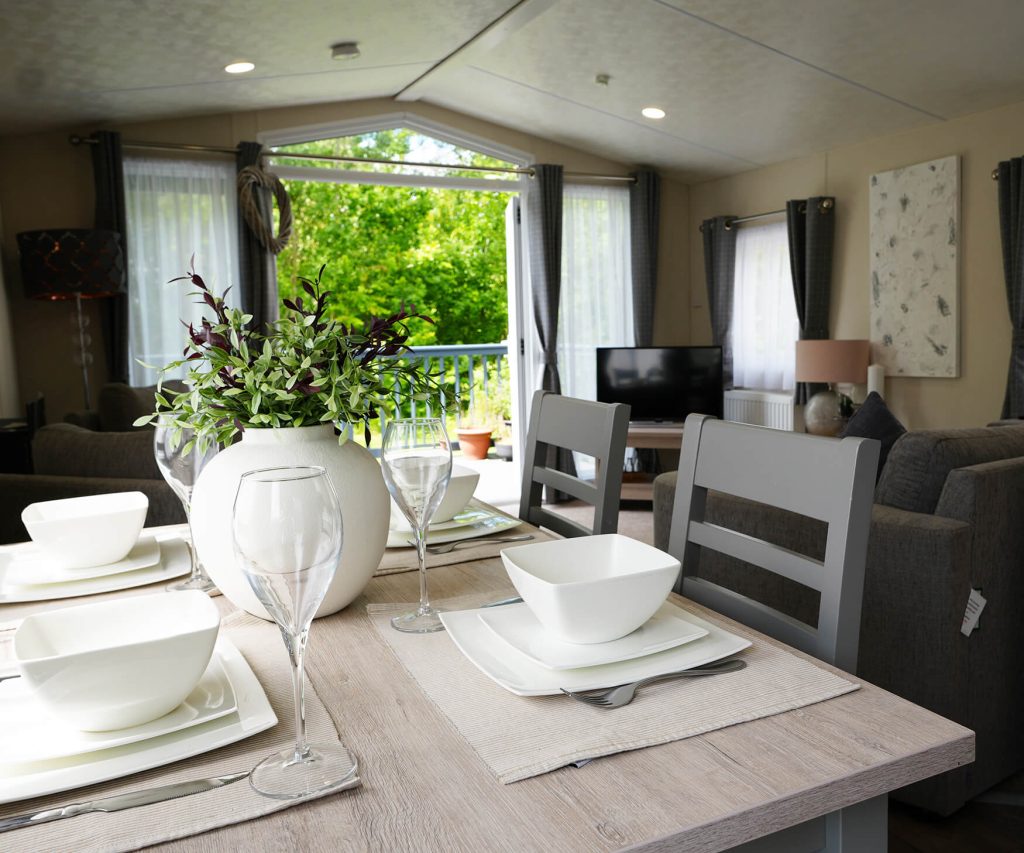
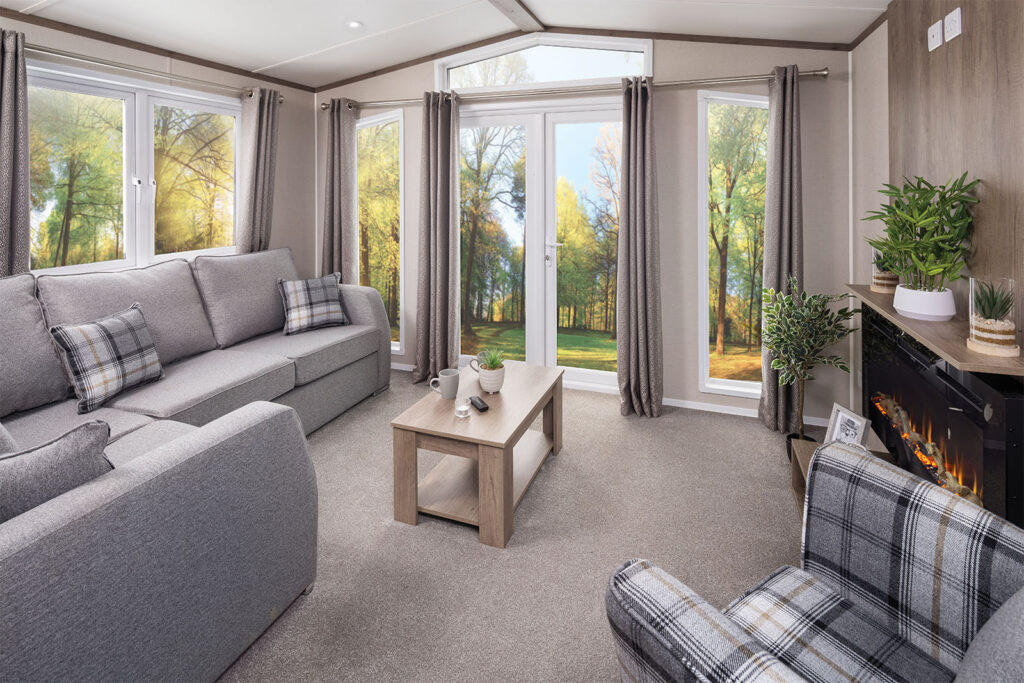
Both lodges and static caravans are holiday homes that sit on a pitch at a holiday park. Both can be a great way to get away. But they’re built differently, they feel different inside, and they usually cost different amounts. Here’s an honest look at the general differences, so you can decide what’s right for you.
The short answer
A static caravan is usually a single unit, typically built to the European holiday caravan standard, BS EN 1647. A holiday lodge is usually larger, often a twin unit, and is generally built to BS 3632, the British standard for residential park homes. Lodges generally cost more. Statics are a lower-cost way into holiday home ownership. On a holiday park, both are for holiday use only.
Build standards: BS EN 1647 vs BS 3632
- BS EN 1647 is the standard for holiday caravans. The National Caravan Council (NCC) describes holiday caravans as “built to BS/EN1647 for holiday and recreational use” (NCC best practice guidance). The NCC’s thermal rating scheme for these units assumes they aren’t used from the beginning of December to the end of February (NCC thermal rating scheme).
- BS 3632 is the British Standard for residential park homes, built “for use as permanent places of residence” (BSI: BS 3632:2023). The NCC defines holiday lodges as units built to BS 3632 “and sold and marketed for holiday and recreational use only”. It also notes that some BS 3632 units are marketed as holiday caravans.
In practice, the names aren’t fixed. Always ask which standard a unit is built to, rather than going by whether it’s called a lodge or a caravan.